

Beware of Scams, Fraudsters

There are people who try to take advantage of an already chaotic situation. Keep an eye out for these scams.
Read more
There are people who try to take advantage of an already chaotic situation. Keep an eye out for these scams.
Read more

We’ve previously shared about employment scams, where fraudsters prey on victims looking for jobs. In a typical employment scam, the fraudster poses as an employer and sends the victim a check with instructions to deposit it into the victim's account, keeping a small portion of the check for themselves and wiring the remaining balance to another account. A few days later, the deposited check returns on the victim’s account (as a counterfeit, account closed, or other non-payment reason), leaving the victim responsible for the lost funds.
Read more
Did you hear it was Amazon Prime Day not long ago? If you didn’t, it really caused some people to be frustrated. In fact, many comments were posted on Amazon’s Facebook page about hurried consumers who couldn’t purchase their coveted prizes during this time because the website was slow, crashed, or just did something to prevent them. Well, according to a report from the security firm Shape Security, hackers may have helped cause the problems.
Read more
Have you ever had a mechanic knock on your door to tell you that he was driving by, saw that your car wasn't running correctly, and decided to come by and fix it? He helpfully takes apart your engine at your request, but then stops working and demands money to finish. You pay what he requested, he works a little more, but tells you more is broken than he thought and that he needs more money. This cycle continues until you stop giving him money, at which point you're left with a disassembled car in your driveway and a lot less cash in your wallet than you started the day with. What mechanic could know your car's repair needs simply from driving by? Moreover, why would the "repairs" happen in your driveway? If this situation sounds nonsensical, that's because it is. But, that's basically the same idea as a common fraud technique: The PC cleaning scam.
Read more
As of September 21, 2018, freezing and unfreezing your credit is now free. Under a new federal law, you will no longer need to pay a fee for freeze requests, and fraud alerts on credit reports are now valid for a year, extended from the prior timeline of 90 days.
Read more
Imagine finding a pile of cash on the ground, let's say $1,000. No one's around and you can't spot the person who may have dropped it. What do you do? Many of us would pick it up and turn it in, possibly to the police, but there are people out there for whom the dollar signs would take over and that money would end up in their pocket.
Read more
Phishing is still one of the most common fraud schemes out there. Here, we break down email phishing and spam emails.
Read more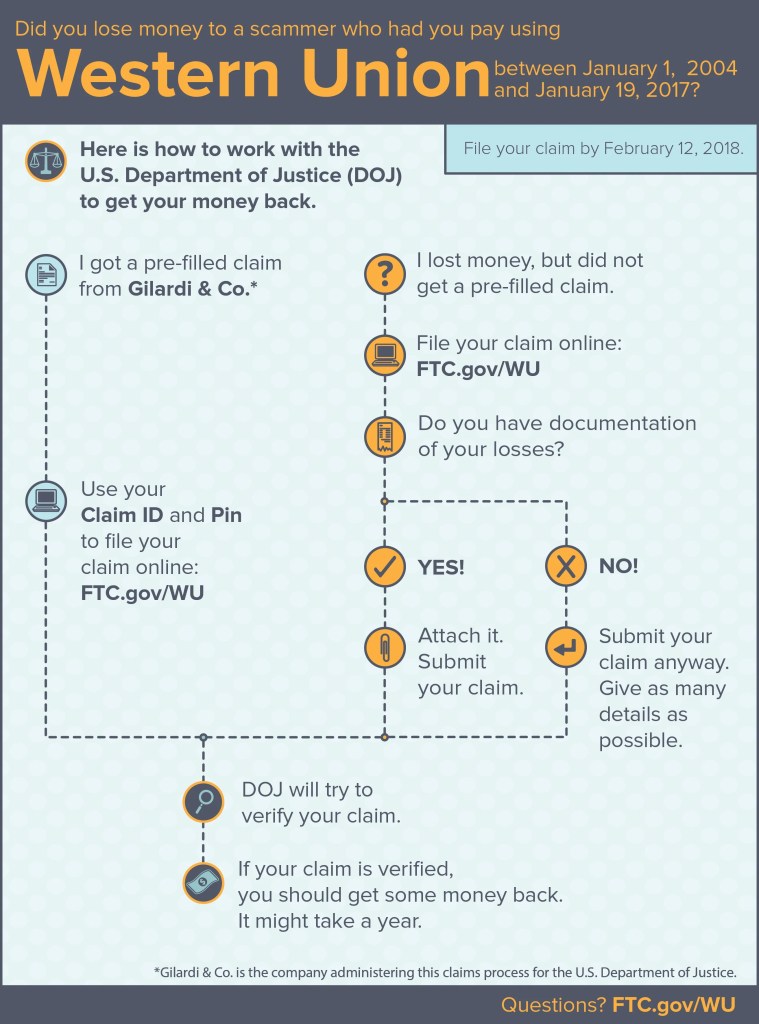
The Federal Trade Commission (FTC) recently announced some good news for those who fell victim to scams involving wiring funds via Western Union: they can submit a claim by February 12, 2018 to get their money back.
Read more
Phishing attacks are always evolving and trying to force us into ignoring our own good sense. A common attack is the infamous technical support scam. Historically, this involved a phone call from someone claiming you need help with your computer, an email message that directed users to fake sites where malware was installed, or a fake tech support popup message requesting payment card numbers. While those are still common, Microsoft researchers have discovered a new play on this scam.
Read more